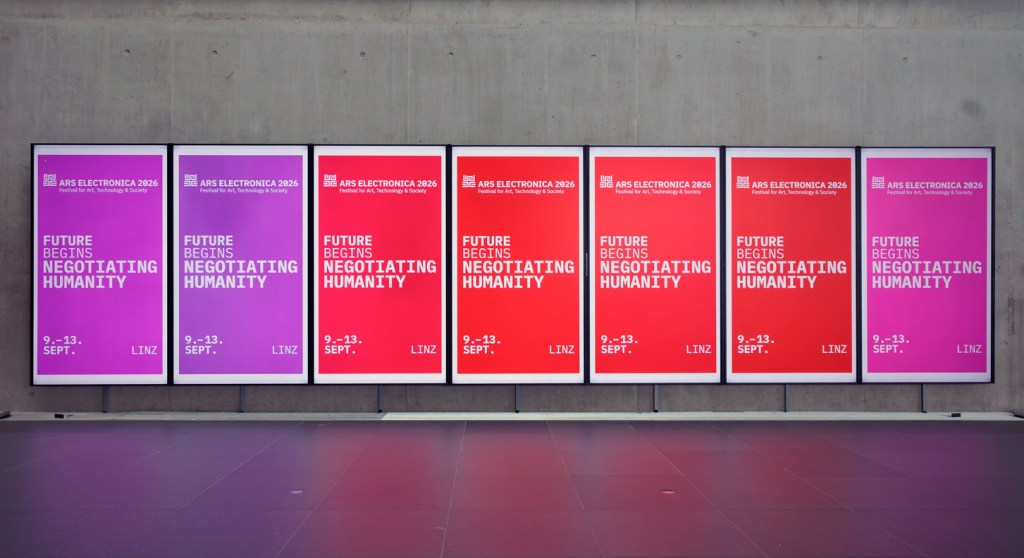
From Europe’s technological sovereignty to water as a global resource, the diverse topics of the conferences at the 2026 Ars Electronica Festival are united by a common question: Who shapes the future?
The Ars Electronica Festival has always been a venue for open discourse on the issues of our time. This year’s conference program therefore once again focuses on current social issues: for example, the ability of democratic societies to remain capable of taking action and engaging in dialogue in the face of technological upheavals and geopolitical conflicts, or access to artificial intelligence (AI).
Standing Up to Escalation in the Digital Realm
The first conference, titled “Negotiating Reality – Conflict Culture, AI, and Democracy in the Digital Public Sphere,” on Wednesday, September 9, will examine the forces shaping the digital public sphere—from algorithms and disinformation to psychological mechanisms. Political scientist Ivan Krastev (BG) will open the day with reflections on democracy in the age of digital polarization. Political analyst Isabel Linzer (US), social psychologist Jon Roozenbeek (UK), and communication scholar Alexander Sängerlaub (DE) will discuss how digital platforms and content creators influence political debates. Political scientist Gustav Gressel (AT) and investigative journalist Jessikka Aro (FI) will address disinformation as a political tool of power. Christina Schwaha (AT) and Stefan Rathmanner (AT) from the Austria Press Agency will provide insight into their work as fact-checkers. The concluding discussion will focus on possible solutions for shaping digital public spaces that support discourse and constructive debate.
Von Europas technologischer Souveränität bis zu Wasser als globale Ressource verbindet die vielfältigen Themen der Konferenzen am Ars Electronica Festival 2026 eine gemeinsame Frage: Wer gestaltet die Zukunft?
Das Ars Electronica Festival ist immer auch ein Ort des offenen Diskurses zu Fragen unserer Zeit. Das diesjährige Konferenzprogramm widmet sich daher erneut aktuellen gesellschaftlichen Themen: etwa der Fähigkeit von demokratischen Gesellschaften, angesichts technologischer Umbrüche und geopolitischer Konflikte, handlungs- und dialogfähig zu bleiben oder dem Zugang zu Künstlicher Intelligenz (KI).
Der Eskalation im digitalen Raum trotzen
Die erste Konferenz mit dem Titel „Negotiating Reality – Conflict Culture, AI and Democracy in the Digital Public Sphere“ am Mittwoch, 9. September, untersucht jene Kräfte, die den digitalen öffentlichen Raum prägen – von Algorithmen und Desinformation bis zu psychologischen Mechanismen. Politologe Ivan Krastev (BG) eröffnet den Tag mit Überlegungen zur Demokratie im Zeitalter digitaler Polarisierung. Politikanalytikerin Isabel Linzer (US), Sozialpsychologe Jon Roozenbeek (UK) und Kommunikationswissenschaftler Alexander Sängerlaub (DE) thematisieren, wie digitale Plattformen und Content-Creators politische Debatten beeinflussen. Um Desinformation als politisches Machtinstrument geht es bei Politikwissenschaftler Gustav Gressel (AT) und Investigativjournalistin Jessikka Aro (FI). Und Christina Schwaha (AT) und Stefan Rathmanner (AT) von der Austria Presse Agentur geben Einblick in ihre Arbeit als Fact-Checker. Die abschließende Diskussion richtet den Blick in Richtung möglicher Lösungen für die Gestaltung digitaler öffentlicher Räume, die Diskurs und konstruktiven Widerspruch unterstützen.
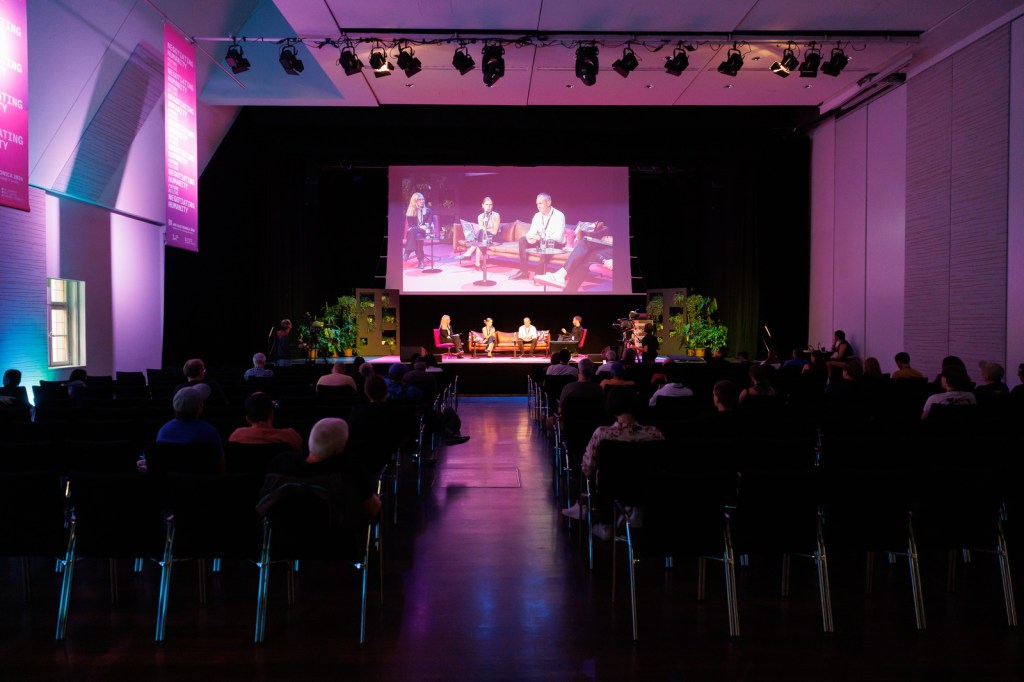
Negotiating Reality – Conflict Culture, AI and Democracy in the Digital Public Sphere
Democracy has always depended on places where different perspectives can meet, disagreement can be negotiated and shared futures can be imagined. Today, many of these encounters take place online, in digital spaces shaped by the logics of attention, amplification and emotional engagement. Here, disagreement can easily turn into polarization and fragmentation, while disinformation is increasingly used to deepen social divides, undermine trust and advance geopolitical interests.
This conference takes Negotiating Humanity as its starting point to explore how democratic discourse can be strengthened in increasingly complex digital information ecosystems.
The programme looks at the forces transforming the digital public sphere—from platform architectures and algorithmic amplification to information manipulation and the psychological dynamics behind polarization. Through current examples, it examines how conflicts are intensified, how disinformation and AI-generated content are changing the information landscape and what these developments reveal about the changing conditions of democratic life.
But the conference does not stop at diagnosis. The second part turns towards the possibilities ahead. If digital spaces have become an important part of our public life, how might we shape them to better support democratic participation and constructive disagreement? What new forms of digital inclusion, deliberation and civic participation could emerge? And how might AI contribute to these processes—not only as a technology that needs to be governed, but as a tool for building new democratic infrastructures?
Together, we will look at the digital spaces of the future and consider how to make them places where democracy can not only survive, but evolve.
AI for Social Impact – Negotiating Humanity in Times of Crisis
Initiated in collaboration with CARE Austria, this conference explores how Artificial Intelligence can contribute to addressing humanitarian, social, and environmental challenges. Marking CARE Austria’s 80th anniversary, it builds on the momentum of the inaugural AI for Social Impact Award, presented this year as part of the Prix Ars Electronica, and extends its central question into a broader public conversation: how can AI be developed and deployed to strengthen humanitarian action in a rapidly changing world?
Against the backdrop of growing crises, armed conflicts, displacement, widening inequalities and the accelerating impacts of climate change, the conference brings together practitioners, researchers, artists and experts working across humanitarian action and technology to examine both the opportunities and the limitations of AI. It highlights initiatives that use AI to improve access to healthcare, education, information, humanitarian services and food security, while strengthening the agency of vulnerable communities. Rather than celebrating technology for its own sake, these projects demonstrate how AI can amplify human expertise, support local capacities and address concrete humanitarian needs in contexts where resources are scarce and challenges are acute.
At the same time, the conference critically examines the tensions between rising humanitarian needs and the growing influence of AI-driven systems. Under what conditions can AI create meaningful social impact? What roles do transparency, accountability, data governance and local knowledge play? And how can humanitarian organizations harness the potential of AI without becoming increasingly dependent on the infrastructures, business models and services of a small number of global technology providers?
Rather than treating AI as an end in itself, the conference approaches it as a subject of social negotiation—one that requires democratic oversight, ethical responsibility and sustained collaboration across disciplines and sectors. From this perspective, the conference culminates in a call to action for the humanitarian sector: not merely to adopt AI, but to actively shape its development and governance, ensuring that technological innovation remains grounded in humanitarian principles, local realities and the rights of the communities it is intended to support.
Symposium Tech-Bro-Topia. A Dystopian Shift of Politics, Economics and Culture?
Tech billionaires like Musk or Thiel promise progress through markets and technology but their visions are anti-democratic, deeply unequal and shaped by a very specific idea of masculinity. This interdisciplinary symposium brings together international experts to ask: whose future is being promoted here and by which means? Confirmed speakers include Alison Winch, Aya Jaff and Arnaud Miranda. Featuring keynotes, Q&A, and a roundtable discussion.
Patterns of Dehumanization
Dehumanization rarely begins with violence. It begins with language, with images, with enemy stereotypes in everyday life. Antisemitism is one of the oldest patterns of this kind, and in the digital space it is simultaneously taking on new, accelerated forms: algorithms amplify outrage and enemy images, antisemitic narratives spread globally and instantly, old stereotypes resurface in new digital forms and threats born online increasingly spill into physical, everyday life.
When words become weapons and language itself becomes the site of conflict, the question arises: Who sets the conditions under which we take positions and who has the right to name them? The Ars Electronica Festival understands itself as an infrastructure for negotiation, a space in which moral certainties can once again become open questions and in which conflicts are not resolved, but made workable.
Conflict competence is not an abstract virtue here, but a fundamental condition of democracy.
This conference is one such space. It asks how patterns of dehumanization work and what art, culture and institutions can set against them. Yehuda Cohen, Emmanuel Witzthum, Zuhdi Najeeb, Luc Bernard, Emilie Moatti and Daphna Horenczyk come from very different fields: political journalism, literature, a shared Israeli-Palestinian cultural center in Jerusalem and digital game development that uses media for Holocaust education and against antisemitism. Together, they take on a subject with no easy answers—one that needs, above all, a space in which those answers can be discussed.

